Skip to content
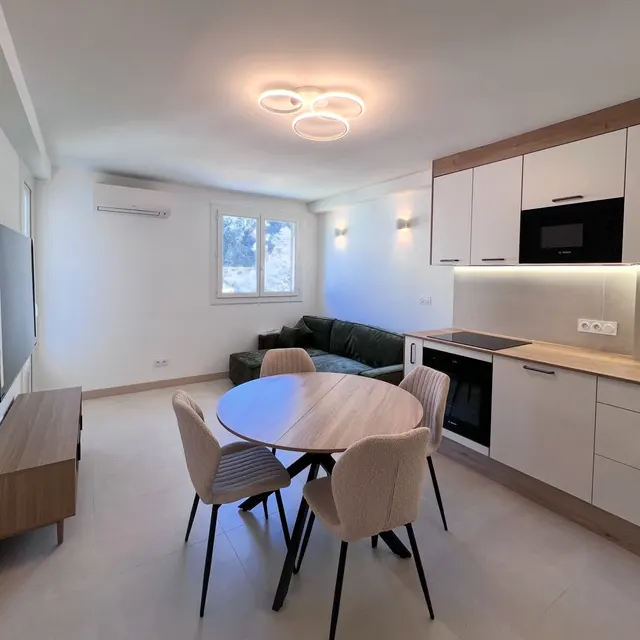
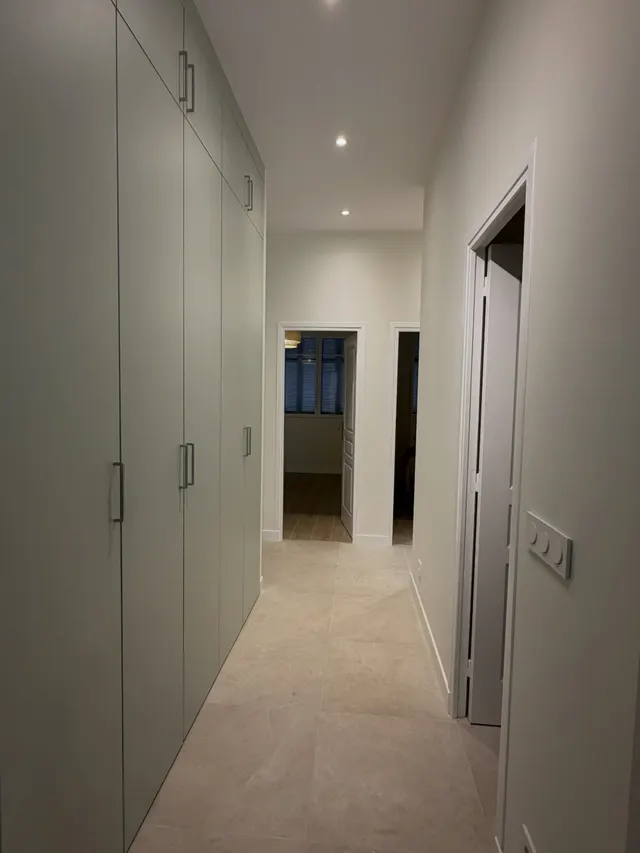
Finished hallway with smooth painted walls, fitted cupboards and recessed lighting

Plastering and painting

The result is decided before the paint. Twelve steps to see where.

You
16 – 32 days
Budget
900 – 2 500 €
Steps
12

Times and budgets are indicative, for a confident DIYer, surprises excluded.

Paint is the only visible part of a job that is mostly invisible. A well-painted wall is a wall that has been stripped, filled, skimmed, sanded, dusted off and primed. On an honest job, the painting itself takes up less than a third of the time; everything else goes into making a surface worth painting.

It is also a matter of drying and of light. A taped joint dries before the next pass, filler is sanded dry, a finish needs two coats with a wait between them. And a defect invisible under the ceiling light becomes obvious when the June sun rakes across the wall.

Finally, this is the trade where the body gives out before the motivation. Sanding a flat is counted in hours, arms above your head, in a dust that gets through every protection. Many DIY projects stop right there: the walls are skimmed and the paint waits six months.

The steps

1
/12

Actually look at the walls

Estimated time 0.5 days

Before choosing a colour, identify what you are dealing with: old plaster, plasterboard, rendered brick, wallpaper over wallpaper. Look for cracks, tide marks and salt deposits low down. A damp or cracked wall is a problem, but not a painting problem.

Tools

  • adjustable site work light
  • scraper
  • damp meter
  • filling knife

What goes wrongPainting over a tide mark left by a leak. It comes through both coats within weeks: back to the substrate.

2
/12

Empty the room and protect it

Estimated time 0.5 – 1 days

Take out everything that can come out, group the rest in the middle under a sheet, protect the floors, remove the switches and sockets once the circuits are off. A genuinely empty room is worked twice as fast, and with no brush-work touch-ups.

Tools

  • heavy-duty floor sheeting
  • good-quality masking tape
  • screwdriver

What goes wrongMasking with packing tape. It takes the paint off as it comes away, or leaves adhesive that will not clean off.

3
/12

Strip back to something sound

Estimated time 1.5 – 3 days

Wallpaper with a steam stripper, flaking paint with a scraper, glass-fibre wallcovering torn off and the wall skimmed behind it. You go down to a substrate that is sound and well bonded, not merely clean. It is long, it is wet, and it is the only guarantee that what follows will hold.

Tools

  • wallpaper steam stripper (hired)
  • wide scraper
  • filling knives
  • step ladder

What goes wrongPainting over wallpaper that is still up. The lengths lift along the seams and take the new coat with them.

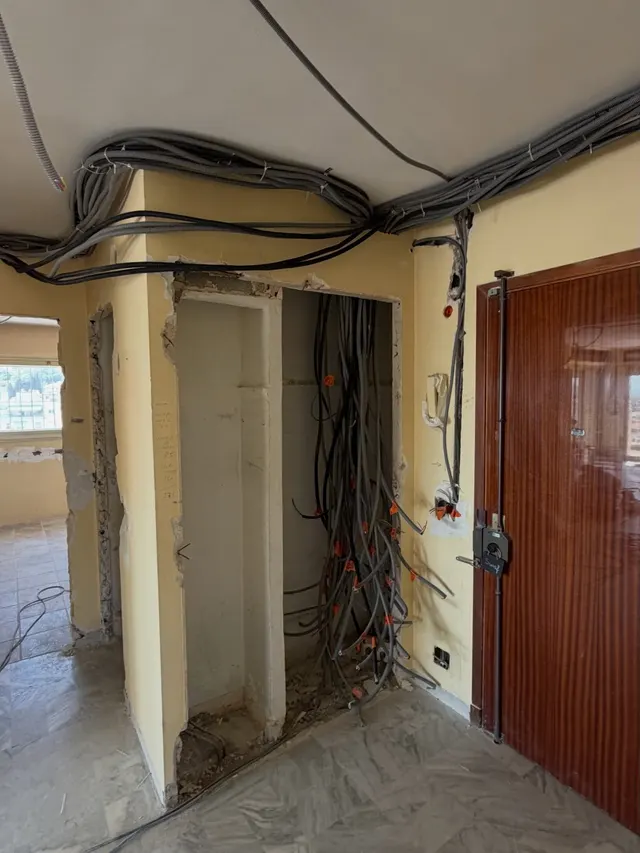
Old room with walls stripped back before skimming, moulded arch and rubble sacks on the floor
4
/12

Treat the causes before the symptoms

Estimated time 0.5 – 2 days

A fine, stable crack: scrim tape and filler. A crack that goes right through the wall, widens or always comes back in the same place is a structural matter, not a finishing one. Salts and damp are treated at source — waterproofing, ventilation, rising damp — before any finish coat.

Tools

  • scrim and jointing tape
  • fibre-reinforced filler
  • wire brush
  • a product suited to the substrate

What goes wrongFilling a live crack. It comes back identically within one winter, straight through new paint.

5
/12

Partitions and wall linings

Estimated time 2 – 4 days

Track at floor and ceiling, studs every 60 cm, insulation, boards screwed at a regular spacing. A partition is set out with a laser on all four faces of the room before the first screw. Plan the noggins for whatever gets fixed later: a television, wall units, a shower rail.

Tools

  • laser level
  • plasterboard screwdriver
  • knife and board rasp
  • track snips

What goes wrongForgetting the noggins in the frame. A loaded wall unit rips out of a 13 mm board with a piece of the partition attached.

Newly fitted plasterboard lining, with pencil set-out marks and cables left waiting
6
/12

Ceilings

Estimated time 1.5 – 3 days

Making good an existing ceiling, or a new one in boards on hangers: the hardest work of the trade, arms above your head, and the place where flatness shows most, because the light always rakes across it. Boards go up with two people, or with a board lifter.

Tools

  • board lifter (hired)
  • hangers and furring channel
  • rotary laser level
  • plasterboard screwdriver

What goes wrongSpacing the hangers wider than the manufacturer allows. The ceiling sags between supports, and the ripple appears the moment you use a satin paint.

7
/12

Taping and jointing

Estimated time 2 – 4 days

Three passes: one to bed the tape, one to fill, one to feather out wide — each on the dry one before it, each wider than the last. A good joint cannot be felt with your hand. It is the movement in this trade that takes the most hours to acquire.

Tools

  • filling knives 15, 25 and 35 cm
  • stainless plastering trowel
  • paper jointing tape
  • jointing compound
  • mixing bucket

What goes wrongFilling a joint in one thick pass. It cracks along its whole length as it dries: open it up and start again.

8
/12

Skim coat

Estimated time 2 – 4 days

On an old wall, or after repairs, a skim over everything evens out the substrate: two thin crossed passes across the full surface, otherwise the filled and unfilled areas will drink the paint differently. It is the item people drop to save time, and the one they then see every day.

Tools

  • wide stainless trowel
  • skim coat
  • bucket and paddle mixer
  • raking work light

What goes wrongSkimming only the filled patches. After painting, the wall shows matt blotches wherever the filler was: permanently.

Wall with the chases filled and skimmed, ready for the finishing coat
9
/12

Sanding

Estimated time 1.5 – 3 days

Long-reach sander connected to a vacuum, progressive grits, raking light on at all times, mask and goggles. This is the stage where you understand why skimming is priced by the square metre. Use your hand rather than your eye: touch finds what the light hides.

Tools

  • long-reach sander with extraction (hired)
  • abrasives from 80 to 180 grit
  • FFP2 mask and goggles

What goes wrongSanding without extraction. The dust settles everywhere, comes back onto fresh walls and stays under the paint.

10
/12

Dust off and prime

Estimated time 0.5 – 1 days

Vacuum the walls, the ceilings and the floor completely, then one coat of a primer suited to the substrate. It seals the porosity and lets the two coats that follow dry evenly. On new plaster, that coat is not optional.

Tools

  • site vacuum
  • dusting brush
  • roller and paint tray
  • primer suited to the substrate

What goes wrongDropping the primer to save a tin. The finish is absorbed unevenly: a third coat to catch up.

11
/12

Paint: ceilings, walls, woodwork

Estimated time 3 – 6 days

Ceilings first, walls next, woodwork last. Two coats everywhere, crossed, keeping a wet edge so the joins do not show. Work room by room: a half-painted room is a room to repaint.

Tools

  • rollers with the right pile
  • paint tray
  • cutting-in brushes
  • extension pole
  • mobile tower (hired)

What goes wrongLetting the edge of a band dry over the lunch break. The join leaves a shiny ridge that the second coat does not hide.

Wall finished in a textured decorative plaster, lit in raking light by a wall lamp
12
/12

Touch-ups, accessories, cleaning

Estimated time 0.5 – 1 days

Pull the masking off before the paint is fully dry, refit the sockets and switches, fit the skirtings, walk round with a lamp looking for misses and runs. One day of finishing separates an almost-finished job from a delivered one.

Tools

  • touch-up brush
  • knife
  • screwdriver
  • mitre saw
  • inspection lamp

What goes wrongPulling the masking tape off once the paint is completely dry. The film tears and takes the paint with it along the edge.

Switch refitted and aligned on a painted wall, even matt finish

Do it yourself, or have it done

  • You can do this
  • Better left to a pro
  • Regulated by law
  • You can do thisStripping wallpaper and old coatingsLong and messy, but no risk: the best place to invest your own time.
  • You can do thisBuilding partitions and linings in plasterboardRepetitive and well documented, provided you set out with a laser and plan the noggins.
  • Better left to a proBoard ceiling on hangersArms above your head, two people, with a flatness that raking light checks without mercy.
  • Better left to a proTaping and jointingThe movement that separates the amateur from the professional, and it shows on every wall.
  • Better left to a proSkim coat over a large areaTwo crossed passes over dozens of square metres: the evenness comes from habit.
  • You can do thisSandingWithin reach with a hired long-reach sander and extraction: it is stamina, not technique.
  • You can do thisPainting walls and ceilingsOn well-prepared surfaces, the result depends mostly on the kit and the method.
  • Better left to a proA moving crack or a damp wallA crack that comes back is not a finishing defect: find the cause before you fill it.
  • Regulated by lawPainting or rendering a façadeChanging the external appearance needs a déclaration préalable (prior works declaration) at the mairie (town hall), and the agreement of the copropriété (co-owned building).

You or Zenith

You

  • 16 to 32 days of actual work for an empty flat of average size
  • €900 to €2,500 of materials, fillers, paint and tool hire (indicative)
  • No way back if the joints or the skim show up once the paint is on
  • A home that is unusable, sheeted and dusty, for the whole duration
  • Sanding a whole flat, alone, arms up, in the dust

Zenith

  • Free quote within 48 h
  • One contact from floor to ceiling
  • Price agreed before work starts

Price range

  • Loading…
  • Loading…
  • Loading…

Range excl. VAT — VAT varies with the type of work

Indicative range, not contractually binding.

This estimate is not a quote: the final price is set with you, after a site visit.

Common questions

How long does it take to repaint a flat?

If the walls are sound and already smooth, painting an empty flat takes three to six days. If they have to be stripped, boarded, skimmed and sanded — the usual case in older buildings — count on sixteen to thirty-two days. The difference does not come from the paint, but from the preparation.

Do you have to skim before painting?

On a wall that is already smooth, in good condition and already painted, spot filling is enough. On old plaster, after removing a wallcovering or after chasing, a full skim is necessary: without it, the paint reveals the difference in porosity between the filled areas and the rest of the wall.

Can you paint over wallpaper?

Technically yes, on paper that is perfectly stuck down, with no open seams, using a suitable primer. In practice the moisture in the paint often lifts the lengths and the texture stays visible. On a job meant to last, the paper comes off.

How many coats do you need?

A primer then two finish coats, everywhere, whatever the tin promises. On a big colour change a third is sometimes needed. Changing product part-way through creates a visible difference in shade.

Plasterboard partition or traditional plaster?

Boards on a metal frame go up faster, are easier to carry up a staircase, and let you build in insulation and services. Traditional plaster is harder against impact and suits certain repairs in older buildings. For an internal partition, boards are the usual answer.